Tuesday, May 15, 2012

TKAM Southern Gothic Worksheet

This post is for freshmen only.


In my 'tostu' folder - jcowlin - you will find a document entitled "TCAM Southern Gothic worksheet." Your task is as follows:

  1. Open the document.
  2. Supply evidence for each claim in each field. (Click on each field to type in it. Use cited quotations to support your responses.)
  3. Save your work.
  4. Print out a copy to be turned in for credit.

The assignment is due Thursday. This is independent work, so you may not work with partners. This is step one of a process, so the more thoughtful and thorough your responses, the easier and better your next step will be. Work diligently, and if you have any questions ask the instructor.

Tuesday, May 8, 2012

Types of Courage in Mockingbird

This post is for freshmen only.


Today we are going to examine not only the amount of courage a character has in To Kill a Mockingbird, but the kind of courage.  For the sake of our exercise, let's assume there are six types of courage:

  • physical
  • spiritual
  • intellectual
  • moral
  • social
  • emotional


Here is your task:  Select one character from the novel and answer the following two questions in a single, thoughtful, thorough paragraph:

What kind of courage does this character demonstrate,
and how much does he or she demonstrate?

Your paragraph should include a minimum of two properly cited quotations. It should employ correct grammar, spelling, mechanics, and punctuation. It should contain a topic sentence, a set-up to each piece of evidence, properly cited quotations, and rich analysis. Hard copies of all paragraphs must be turned in; responses should not be posted in the comments below.

HINT: You may want to start your paragraph with a definition of the type of courage you plan on discussing.

Tuesday, May 1, 2012

To Kill a Mockingbird - Part 1 Online Discussion

This post is for freshmen only.


You will be participating in an online discussion. Your posts should be thoughtful and thorough, and your posts should include specific details - at times using cited quotations. Grammar, spelling, and punctuation count.

You will be graded on quantity as well as quality. All material must be appropriate for class. Be sure to post your name. This entry will be open for a few days, so if you wish to add more beyond this period, you may certainly do so.

You may either start your own thread with a question or comment, or you may comment on someone else's thread. Just be sure to pay attention to which button you are clicking on. I'll start you off with a few questions of my own.

One last thing...You may wish to write your entries in Word and then copy and paste them into the blog field (just in case the blog looses a comment.)

Here we go...

Tuesday, April 17, 2012

Qualities of Southern Gothic Literature

This post if for freshmen only.


Southern Gothic
Literary Tradition

Gothic literature is fiction in which strange, gloomy settings and mysterious, violent, often supernatural events create suspense and terror. Southern gothic literature uses gothic motifs to explore social issues and reveal the cultural character of the American South.


Following are a few characteristics of gothic and southern gothic literature:
  1. The gothic novel tries to evoke chilling terror and gloom by exploiting mystery and horror. Gothic is about haunting and possession.  We are supposed to feel a chill at some point in the story, and this emotional response is in part the point of the gothic experience. Paradoxically, this fear is a source of pleasure.  "Tis so appalling--it exhilarates," Emily Dickinson says in a poem.
  2. In a Gothic work, there is usually confusion about good and evil. What does ‘good’ actually mean? What about ‘evil’? And how can we tell the difference?
  3. Gothic reveals a fear of institutions, such as religion, education, or marriage.
  4. Gothic shows the dark and hidden side of things. It rips open the lies and shows a world of cruelty, lust, perversion, and crime hidden beneath society’s rules and customs.
  5. Gothic tears through censorship and explodes hypocrisies. It exposes the world as a corrupt, reeking place.
  6. Gothic is a reaction to the conventional, common sense, and enlightened world. If society is supposed to be orderly and sensible, gothic shows how it really isn’t.
  7. Southern gothic tips stereotypes on their side and kicks them in the gut. Sweet Southern belles are crafty and greedy, chivalrous gentlemen are sneaky and perverse, and righteous preachers are manipulative and evil.

Your task: We've tackled two short stories that can be considered Southern Gothic - "Good Country People" and "A Rose for Emily." We also viewed Night of the Hunter - again, classic Southern Gothic. Select one of the stories, and in a paragraph explain how one aspect of the story meets one of the criteria listed above.

Be sure that your response is thoughtful and thorough and includes a cited quotation. Keep in mind all of the elements of a good paragraph: topic sentence, set-up, cited quotation, explanation (claim - evidence - warrant). Write in formal third person. Post your paragraphs in the comments below. Include you name. you may comment on your peers' entries for extra credit.

The text for "A Rose for Emily" can be found HERE.  The text for "Good Country People" can be found HERE.

Wednesday, April 11, 2012

Night of the Hunter - Southern Gothic

This post is for freshmen only.

First, a review. Here are the criteria of Southern Gothic literature/cinema:


1. The gothic novel tries to evoke chilling terror and gloom by exploiting mystery and horror. Gothic is about haunting and possession. We are supposed to feel a chill at some point in the story, and this emotional response is in part the point of the gothic experience. Paradoxically, this fear is a source of pleasure. "Tis so appalling--it exhilarates," Emily Dickinson says in a poem.


2. In a Gothic work, there is usually confusion about good and evil. What does ‘good’ actually mean? What about ‘evil’? And how can we tell the difference?


3. Gothic reveals a fear of institutions, such as religion, education, or marriage.


4. Gothic shows the dark and hidden side of things. It rips open the lies and shows a world of cruelty, lust, perversion, and crime hidden beneath society’s rules and customs.


5. Gothic tears through censorship and explodes hypocrisies. It exposes the world as a corrupt, reeking place.


6. Gothic is a reaction to the conventional, common sense, and enlightened world. If society is supposed to be orderly and sensible, gothic shows how it really isn’t.


7. Southern gothic tips stereotypes on their side and kicks them in the gut. Sweet Southern belles are crafty and greedy, chivalrous gentlemen are sneaky and perverse, and righteous preachers are manipulative and evil.

Here is your task:

  1. Find a specific moment in the film that in some way illustrates one of these criteria.
  2. In a thoughtful, thorough paragraph, describe in detail the moment of the film and connect it to one of the criteria.
  3. Post your paragraph in the comments bellow.
  4. Check other comments to make sure no one has previously discussed the moment of the film you are discussing. (No repeats!)

Is extra credit available? Yes. After you have posted your response, feel free to comment/respond to your peers and participate in an online discussion.


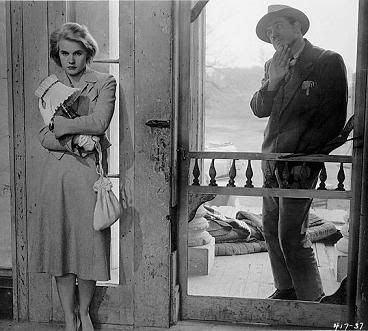
Here are some images from the movie that might help jog your memory:


Wednesday, March 21, 2012

Sci-Fi Dilemmas in District 9

This post is for JUNIORS only.


District 9 tackles a variety of real world problems: South Africa's apartheid, South Africa's racist attitudes towards Nigerians, people's willingness to buy into media smear campaigns, immigration issues, the abuse of authority by police, the utilization of concentration camps, and more. 


The film, however, is basically broken into three acts with each act focusing on one basic problem:
  1. The first third of the film deals with MNU's treatment of the aliens and the way they plan to force them into a concentration camp. In other words, the first third of the film explores how horribly governments and corporations can treat groups of minorities.
  2. The second third of the film deals with MNU's inhuman treatment of Wikus and how horribly governments and corporations can treat individual members of society.
  3. The final third of the film deals with how people have a natural instinct for self preservation which often leads to selfish and callous behavior towards others.


Your task is to accomplish the following objectives:
  • Select one of the three acts about which you would like to write.
  • View the clip below that illustrates the act's central real world problem.
  • Write a thoughtful, thorough, grammatically correct paragraph in which you thoroughly explain how the clip illustrates just how the problem exists in the film.
  • Write a second paragraph in which you thoroughly explain how this real world problem exists in either (1) the real world, (2) A Long Way Gone, or (3) another film or book or your choice.


If you have any questions, please ask an instructor. As always, use the following list to edit your work:
  • third person
  • present tense
  • no contractions
  • correct grammar/punctuation
  • correct spelling
  • correct capitalization
  • book titles italicized
  • a creative, original title for your essay 


Act I:  The treatment of the aliens by MNU
(The treatment of minority groups by governments and corporations)


Act II:  The treatment of Wikus by MNU
(The treatment of individuals by a government or corporation)


Act III:  Wikus is ruled by his fear of MNU and his prejudice of the aliens
(Individuals are ruled by instinctive fears and prejudices)


Two more points of interest:

Be sure to bring your Fahrenheit 451 novels the day after break.


If you enjoyed District 9, you might also enjoy Monsters.

Thursday, March 8, 2012

A Long Way Gone - Intro and Conclusion

This post is for juniors only.

Now that you've completed your three body paragraphs, it is time to write your introduction and conclusion.


Your introduction should include the following four elements:

  1. hook (attention grabber)
  2. link (in which you introduce the title and author of the book about which you are writing)
  3. thesis (in which you present the claim that, throughout the book, Ishmael goes through several character changes)
  4. bridge (in which you explain just what those character changes are)


Your conclusion should satisfy two criteria:

  1. briefly summarize the central idea of your essay
  2. ask the question, "So what?" - in other words, the conclusion should make the essay relevant to the reader


As always, you are responsible for the following editing criteria:

  • third person
  • present tense
  • no contractions
  • correct grammar/punctuation
  • correct spelling
  • correct capitalization
  • book titles italicized
  • a creative, original title for your essay 

Tuesday, March 6, 2012

Point/Counter Point

This post is for freshmen only.


Review page one of your study guide, the page entitled 'Anticipation Guide'. Below you will find three of the statements with which you have already agreed or disagreed.

  • It does not matter how others view a person as long as that person understands himself.
  • The reason for discrimination is people hating other people.
  • There is a price to pay for achieving the America Dream.

Here is your task:
  1. Select one of the three statments.
  2. Write a thoughtful, thorough paragraph in which you present a piece of evidence that suggests the claim is true.
  3. Write a thoughtful, thorough paragraph in which you present a piece of evidence that suggests the claim is not true.
  4. Finally, write a paragraph in which you present your conclusion: Which piece of evidence is stronger?

Each paragraph must contain a topic sentence. Evidence must come from a book, a story, film, pop culture, history, current events, etc. The evidence must be presented within context (set up). The evidence must also be specific. The explanation - connecting the evidence to the claim/topic sentece - must be well thought out and thorough.

The same editing criteria apply as in the last essay: 
  • properly cited quotations (if used)
  • no first or second person
  • present tense only
  • no contractions or slang
  • book titles italicized (if used)