Thursday, January 5, 2012

Of Mice and Men Final Exam Review

This post is for Freshmen only. The following assignment is due by Monday, 1/10.

In the comments section, record an entry the contains the following components:
  1. one significant quotation from Of Mice and Men
  2. the speaker of the quotation
  3. to whom the quotation is being spoken
  4. a brief context of what is happening in the scene
  5. the page number
  6. your name (to receive credit)
There are a few stipulations. First, no repeats. Second, first come, first served. Third, the more significant and important your quotation, the more helpful this study guide will become.

Final Exam Review - A Raisin in the Sun

This post is for Freshmen only. The following assignment is due by Monday, 1/10.

In the comments section, record an entry the contains the following components:
  1. one significant quotation from A Raisin in the Sun.
  2. the speaker of the quotation
  3. to whom the quotation is being spoken
  4. a brief context of what is happening in the scene
  5. the page number
  6. your name (to receive credit)
There are a few stipulations. First, no repeats. Second, first come, first served. Third, the more significant and important your quotation, the more helpful this study guide will become.

Wednesday, January 4, 2012

Personal Manifestos

This post is for JUNIORS only.


Today we're going to take a look at manifestos. But first, what is a manifesto? Well, here goes...


A manifesto is a public declaration of one's principles and intentions. 


A manifesto is an expression of what you think is important.


A manifesto is a plan of how you want to work at you profession and live your life.


A manifesto is a list of the principals that drive you and to which you aspire.


Got all that? Maybe, maybe not. It will get clearer if we take a look at some examples. The first is from a famous architect.


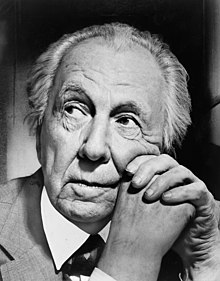
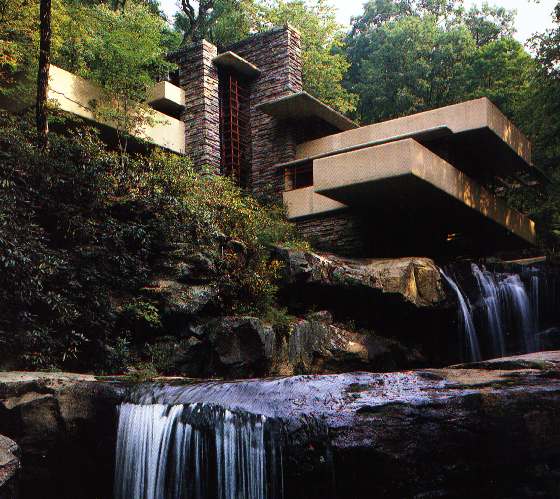
Frank Lloyd Wright was a famous American architect and interior designer who believed in designing structures which were in harmony with humanity and its environment.


Here is Frank Lloyd Wright's personal manifesto:


1. An honest ego in a healthy body.

2. An eye to see nature.


3. A heart to feel nature.


4. Courage to follow nature.


5. The sense of proportion (humor).


6. Appreciation of work as idea and idea as work.


7. Fertility of imagination.

8. Capacity for faith and rebellion.


9. Disregard for commonplace (inorganic) elegance.

10. Instinctive cooperation.


The second manifesto we're going to look at was written  by a famous author.


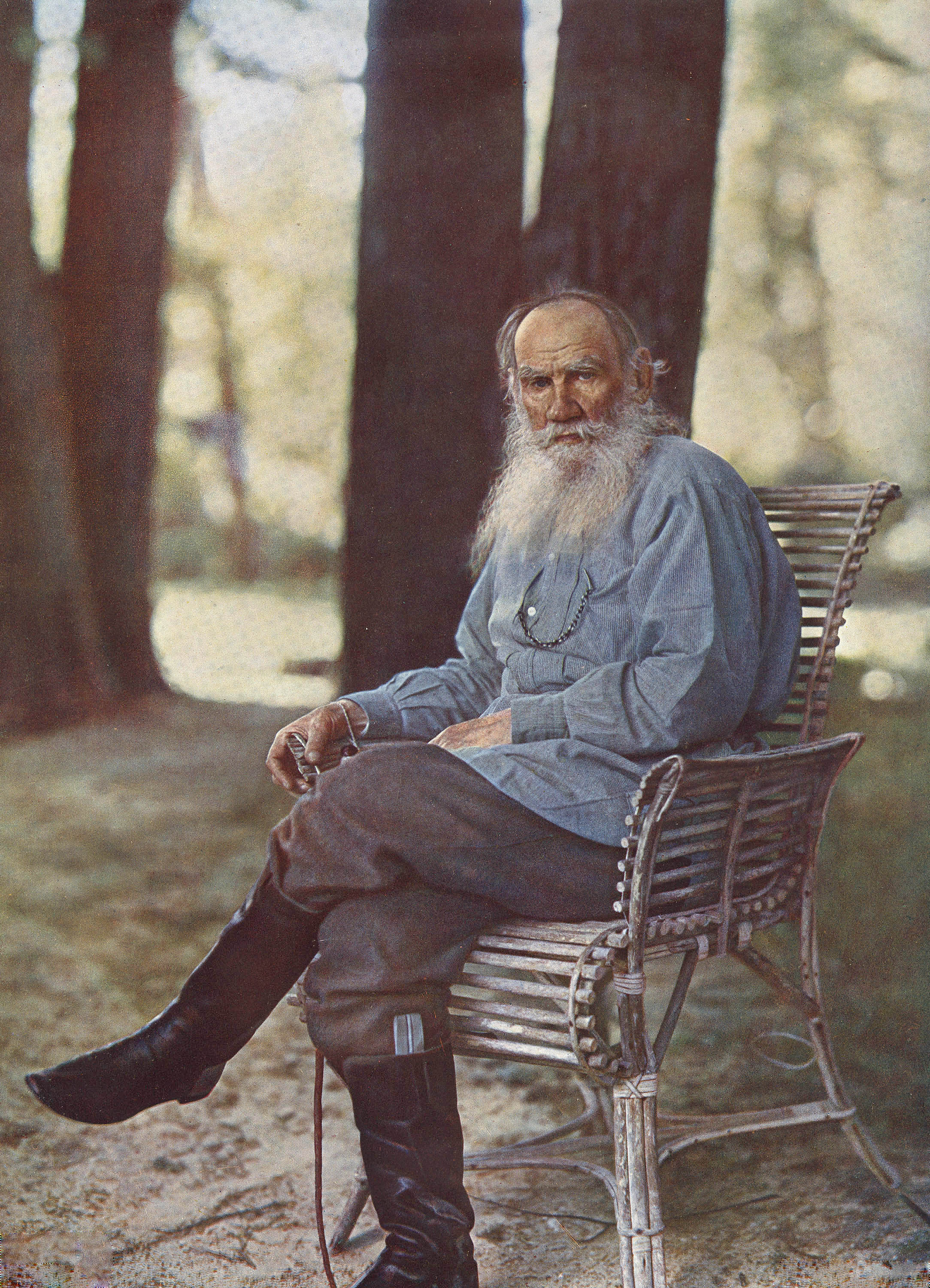
Leo Tolstoy was a famous Russian novelist who wrote two of the greatest novels ever written in any language:


Here is Leo Tolstoy's personal manifesto:


1. Get up early (five o'clock).

2. Go to bed early (nine to ten o'clock).

3. Eat little and avoid sweets.

4. Try to do everything by yourself.

5. Have a goal for your whole life, a goal for one section of your life, a goal for a shorter period and a goal for the year; a goal for every month, a goal for every week, a goal for every day, a goal for every hour and for every minute, and sacrifice the lesser goal to the greater.

6. Keep away from women.

7. Kill desire by work.

8. Be good, but try to let no one know it.

9. Always live less expensively than you might.

10. Change nothing in your style of living even if you become ten times richer.


The last manifesto belongs to an entire company: Apple.


Tim Cook is the CEO of Apple Computers, taking over the position after Steve Jobs resigned. 


When Tim Cook took over Apple, he wrote out a company manifesto:


1. We believe that we're on the face of the earth to make great products. 

2. We're constantly focusing on innovating.

3. We believe in the simple, not the complex.

4. We believe we need to own and control the primary technologies behind the products that we make and participate only in markets where we can make a significant contribution.

5. We believe in saying no to thousands of projects so that we can focus on the few that are meaningful to us. 

6.We believe in deep collaboration and cross pollination in order to innovate in a way others cannot.

7. We don't settle for anything other than excellence in any group in the company.

8. We have the self-honesty to admit when we're wrong and the courage to change.


So here's your task: Answer the following three questions thoughtfully and thoroughly, using quotations to support your responses. As always, proper grammar and mechanics count. Your responses should be typed and handed in on paper.


  1. Which manifesto would be the easiest to live up to and why? Which would be the most difficult and why?
  2. Which manifesto do you think needs a revision? What would the revision be and why?
  3. If you had to, which of the three manifestos would you most likely personally adopt and why?

Friday, December 16, 2011

Gatsby on NES

Just for fun...


An old NES Gatsby game can be found HERE.
.

Your Morning Announcement for Dec. 16

Here it is. Enjoy.


Holiday Morning Show (Friday Dec. 16) from Glenbrook South Television on Vimeo.

One Last Thing Before Break...

This post is for JUNIORS only.

We're trying something new this time. This is not a paragraph. This is a one page essay. That's one page EXACTLY. No more, no less. Double spaced, 12 point font, etc. Have a good title. Answer the following question:

WHAT IS ART?

Due at the end of the period.

Friday, December 9, 2011

Gumpin' It - Intros and Conclusions

If you want some examples of how to echo your introductory hook in your conclusion, you have no further to look than Tom Hanks movies. First up, Forrest Gump. Remember how the movie starts? That feather floating around?


There it is. Just floating through the air for, like, a million years. Then, finally, it lands at Forrest's feet. He bends down, picks it up, and we learn he's sitting on a bench and waiting for the bus.

Anyone remember how the movie ends? That's right. It ends with Forrest sitting on a stump, waiting for a bus. And what's that down by his feet? Could it be?


Now, does the film actually have anything to do with that feather? Well, yes and no. I mean, is the movie about a man with mutant chicken powers who hides his feathers from the world in fear that they will judge, mock, and, ultimately, capture and dissect him in the name of science? Not exactly. Is the film about a small town chicken rancher trying to make it in the big city as a chicken robotics expert? Of course not. Thematically, however, the movie is all about the feather. Forrest, like the feather, is blown by the wind from place to place with no direction or free will of his own. Chance is piloting Forrest's ship, not fate - just like the feather. We call this symbolism. So yeah, the filmmakers chose an opening hook that connects with the body of the film thematically, just like you can choose a hook for your essay that connects thematically - via your link - to your essay's central topic.

Next up, Saving Private Ryan. At the beginning of the movie, an elderly vetran visits the graves of his fallen soldier brethren. We then flashback to the war:


Later, near the end of the film, as Ryan's flashback comes to a close, we flashforward, back to the present with Ryan still kneeling in Arlington Cemetary.


And that's how you know the movie is over. The end echos the beginning, and the audience has closure. It just wouldn't make any sense to suddenly cut back to the war one last time. In the writing business we call it "The End."

One last example. So, okay, Forrest Gump won the Academy Award for best picture (beating Pulp Fiction?), and Saving Private Ryan was nominated (losing to Shakespeare in Love?), but you know what film was robbed of awards and glory? Splash. That's the one where Tom Hanks falls in love with a mermaid. Oh yeah. I don't care how many award-winning films Hanks stars in. For me, he'll always be the guy falling in love with a fishlady. And how!

The movie starts with Hank's character as a kid on a boat, staring at the water. He then jumps overboard and, while everyone panics on deck, sees a mergirl. They, of course, fall in love.


And just try to guess how this thing ends...


So that's how you echo your hook in your conclusion. You think like a Tom Hanks movie.

Question time: What other films, short stories, books, etc. can you think of that utilize the echo technique and 'Gump it'? Please give an example and describe it in detail. (I would expecially like to hear any ideas you might have on Tom Hanks movies I failed to mention. If anyone can think of any, I'll probably post them, too.)

Thursday, December 8, 2011

The Robinson Case Closing Arguments

This post if for freshmen only.


Before we begin, sit together with your group in the lab and plan out your division of labor.


Directions: 
You and a small group are a team of lawyers on the Tom Robinson case.  You are either on Atticus’ team (the defense) or on Mr. Gilmer’s team (the prosecution).  You and your fellow lawyers will compose closing arguments to the Tom Robinson case.  The purpose of the closing argument is to convince the jury to either convict (find guilty) or acquit (find innocent) Tom Robinson. Each closing argument should have five sections:


I. The Opening: (short)
Begin by thanking the jury for its participation in the legal process, and stress how much you appreciate its patience and complete attention throughout the trial. Then begin with an attention-getting hook that incorporates the major issue or theme of the case.  Remind the jury of the prosecution's burden of proving quilt beyond a reasonable doubt and the defendant's legal right to the presumption of innocence.

II. Summary of the Case: (short)
Summarize the entire case briefly in your closing arguments. Organize your summary of the case as if you were telling a story, pointing out each of the key people and relevant events as if they were characters in a novel's plot. This should be easy, since it is a novel. This approach may help the jury to envision and accept your argument as the truth.

III. Laying Out the Evidence: (longer)
Choose strong examples of specific evidence to refer to during your closing arguments. Most jurors will remember evidence that they can see or hear, so prepare to use it during your presentation to highlight the key statements of the witnesses to the case.

IV. Countering the Opponent: (longer)
Refer to arguments you think your opponent is likely to make in her closing arguments. Present a line of reasoning that challenges each of the main points you anticipate your opponent will try to make. Being prepared to address these arguments may help you undercut the effectiveness of your opponent's closing arguments. Exploit what you feel are weaknesses in your opponent’s case. Attack the credibility of the other side's witnesses. Underscore the absence of evidence if you are the defense attorney.  Emphasize the strength of the evidence if you are the prosecution. Challenge the other side's weakest claims.

V. The Final Appeal: (short)
Conclude your message with strength, restating your theme and asking for a verdict of acquittal or conviction.


Elements of an effective argument:
Is your closing statement written to appeal to the core values and entrenched views of jurors in your case?  In Maycomb, this is a big, big deal.  Look at who is on the jury, and what their beliefs and prejudices are.  Think about their attitudes about race, social class, gender and education before you compose a speech to them.

Does your speech have a clear beginning, middle, and conclusion? Does the body of your argument build to a climax at the end?  Do you build to a major point? An emotional appeal?

Criteria:
This project is worth 50 points.  One polished draft should be submitted on behalf of the whole team; however, each section should include the name of lead student who spearheaded the section. (Divide the labor, and explain just how you did so.) Mechanics and style counts. Remember to speak directly to the jury. Convince them of your point of view. Be persuasive.

Wednesday, December 7, 2011

The Great Gatsby - paragraph 3

This post is for JUNIORS only.

For this unit, we will be doing things a little differently. Instead of one long essay, we will be writing a series of paragraphs worth 30 points each. These paragraphs will be graded with the same rigor as a formal essay, and, in the end, will be worth about the same amount of points. In other words, work diligently, hand in your work on time, and be thoughtful and thorough in your responses. These grades most certainly count.


In a thoughtful, thorough paragraph, answer the following question:

How successfully does James Gatz reinvent himself?
In other words, is Jay Gatsby a different person from James Gatz? How so?


Here are the criteria on which you should focus:
  • include at least two quotations from two different pages of the novel
  • correctly cite all quotations
  • set up each quotation with insightful context
  • use commas correctly
  • use correct spelling
  • avoid first and second person
  • avoid contractions and informal language
  • write in present tense
  • take time to thoroughly explain your point of view
If you have any questions or concerns, do not hesitate to get help from the TLC or one of the class instructors.